





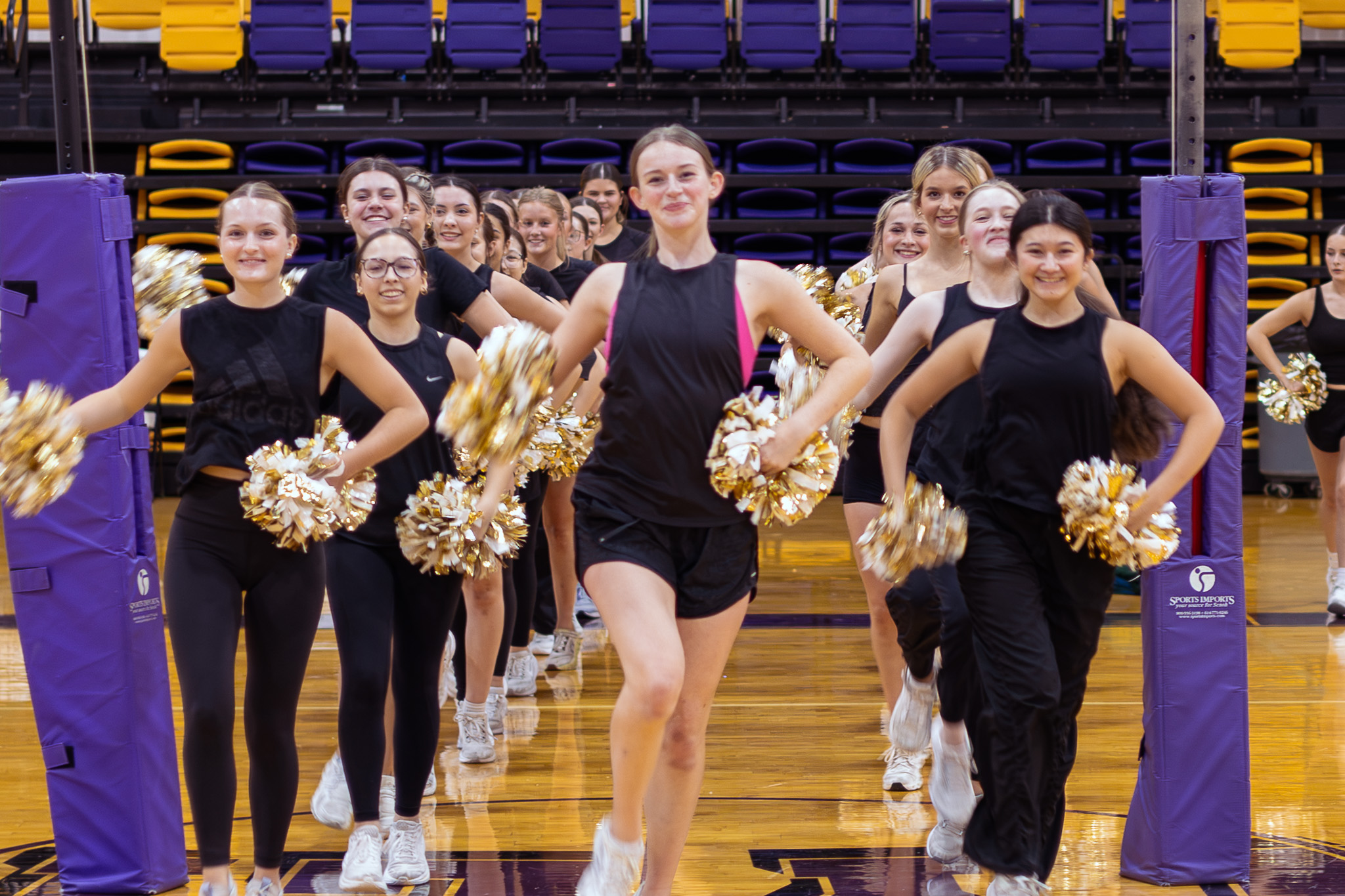
The largest line in Wylie Belle’s history is learning that precision begins long before the music, with six student leaders setting a tone of trust, discipline and encouragement.
When the Wylie Belles hear the words “100 kicks,” no one mistakes them for a suggestion.
Several days a week, the team works through combinations of traditional kicks, diagonal kicks and “monster kicks,” which add lunges and squats to the challenge. The routine builds strength, endurance and precision. It also reveals something an audience may never see beneath the stadium lights: how a group responds when the work becomes difficult.










That is where the officers of the 14th Line begin to lead.
“If we’re like, ‘I don’t want to do that either,’ then the team is going to set a bad tone,” Captain Lynleigh Wallace said. “It’s all about how we cheer them on.”
For Lynleigh, leadership is not simply the gold hat, the whistle or a place at the front. It is the attitude she carries into the next count, because the rest of the line is paying attention.
Thirty-Six Individuals, One Line
That example matters more than ever this year. The 14th Line includes 36 Belles, the largest team in program history. They range from freshmen to seniors, each arriving with her own experience, personality and way of learning.
From the bleachers, 36 performers create scale. On the floor, they create a complicated human puzzle. Every Belle must learn the routine, find her position and match the timing, arm placement and head movement of the people around her. The finished performance may appear effortless. Its unity is built through repetition, correction and attention to one another.
That coordination demands awareness as much as memory. A Belle cannot focus only on her own feet; she must understand spacing, watch the people around her and adjust without breaking the larger picture. The work turns individual preparation into group responsibility, because every performance depends on how well each person supports the others around her.
The goal is not to erase those 36 personalities. It is to teach them how to contribute to something shared.
Helping Lynleigh do that are lieutenants Addie Haney, Ella Wu, Lilian McClendon, Summer Alvarez and Kelsey Eaves. Together, the six officers bring different instincts to the same assignment.
“We really all work together,” Lynleigh said. “How you are as a person is a big part of it.”
That idea changes what leadership looks like. An officer may be the person demonstrating a movement or setting an expectation. She may also be the one who notices when someone needs reassurance, listens before offering advice or makes it easier for a younger Belle to ask a question.
Different Ways to Lead
Ella wants to be an older-sister figure who supports younger team members. Summer hopes her teammates know “they can trust us” and never feel afraid to ask for help. Kelsey wants to be a safe person when someone is having a difficult day.
“Talk to me. What’s going on?” Kelsey said, describing the kind of officer she hopes to be.
Those are simple words, but they say much about the culture the officers want to create. With a line this large, leadership cannot come from one voice alone. It has to travel through the team in conversations, corrections and small acts of encouragement.
Lilian’s example became especially visible after she suffered a knee injury during workouts. She could not move through practice in the same way, but she stayed with the team and cheered from the side of the floor.
“You know you’re a Belle when you push through,” she said. “All of us are very strong.”
Pushing through did not mean pretending the injury was not there. In that moment, it meant finding another way to contribute. Her place on the team was not limited to the steps she could perform.
Addie, now in her third year as a lieutenant, sees the program’s lessons reaching well beyond any one routine.
“You learn responsibility. You learn discipline,” she said. “You learn that if you make a mistake, there are consequences for it, but it’s okay, and you move on.”
That last part may be one of the most useful lessons a performer can learn. Precision matters, but perfection is not the same thing as never making a mistake. It is knowing how to accept a correction, regain the count and keep moving with the people beside you.
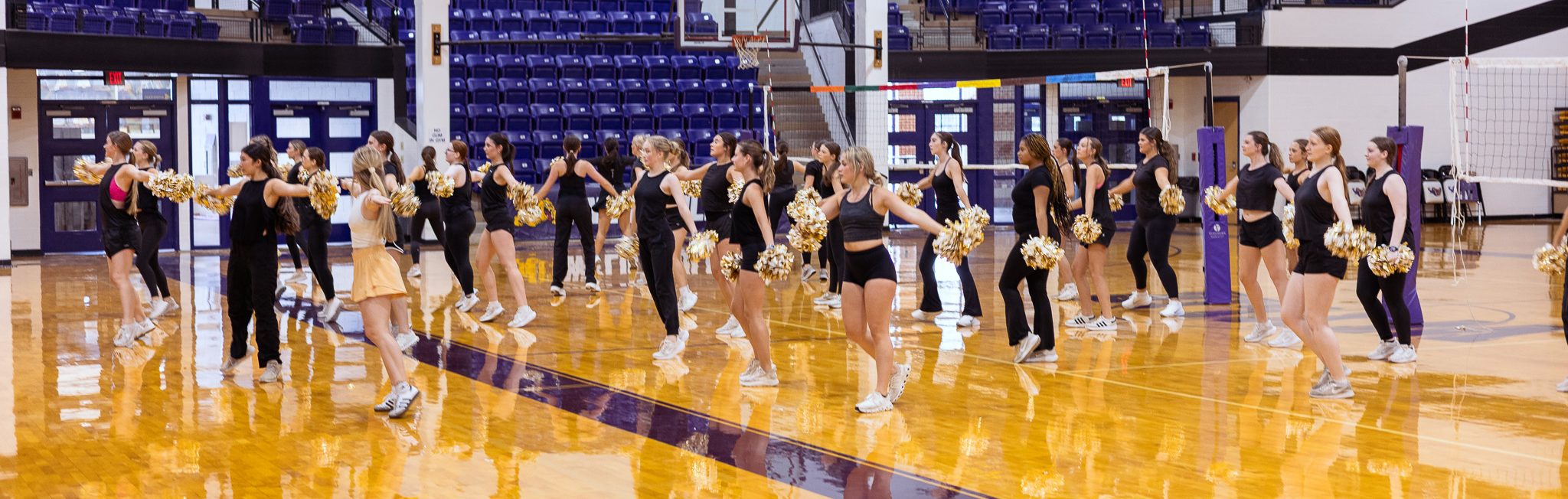
Before the Music Begins
Eventually, the practice clothes give way to uniforms, and the repetitions become a pep rally or halftime performance. Before the Belles step out, however, Coach Kaelin Winters follows a tradition from her own drill-team days.
She walks down the line and double-checks each Belle’s starting line. Then she hands each one a sugar cube.
The sequence is practical and personal: make certain every Belle knows where she belongs, then offer a small boost before the performance begins. The sugar cube lasts only a moment. The ritual connects one line to another and reminds the current team that traditions survive because people choose to carry them forward.
The real surge of energy comes next, when the Belles gather for their chant.
“Who are we?”
“Belles!”
“What do we have?”
“Pride!”
Thirty-six voices answer as one.
What the Crowd Cannot See
This season, spectators will notice the size of the line. They will see gold-and-white poms flash, formations change and carefully matched movements travel across the field. What they may not see are the choices underneath that polish: an officer setting the tone during 100 kicks, a teammate asking if someone is all right, an injured Belle cheering from the sideline or a performer recovering after missing a count.
Those moments do not compete with the performance. They make it possible.
Moving as one does not mean every Belle must lead, learn or respond in exactly the same way. The officers themselves show the opposite. One leads with energy, another by listening. One offers experience; another makes herself available. Their strengths become most useful when they are shared.
The routines will change, and the season will move quickly. Years from now, the exact counts may be harder to summon than the sound of teammates answering the chant together.
“You might not remember every routine you did,” Lynleigh said, “but you’re going to remember the girls you spent your high school years with.”
For the largest line in Belles history, that may be the most important movement of all: 36 individuals learning, count by count, how to make room for one another and still step forward together.